GERALD WINEGRAD: WEAK NEW BAY AGREEMENT IS DEATH WARRANT FOR CHESAPEAKE | COMMENTARY
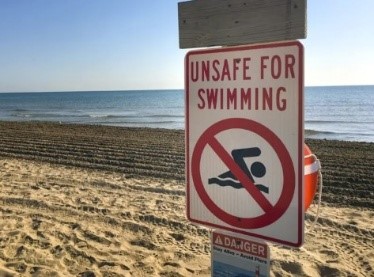
70% of bay waters are so polluted they do not meet Clean Water Act requirements and yet the draft new Bay agreement ignores this fact and does little to remedy the problem. Only a 2.9% improvement has been made in bay water quality since 1985. (Woods Hole Oceanographic Institution)
By Gerald Winegrad
After 56 years of environmental advocacy, tempered by a pragmatic, realistic idealism, I have hit rock bottom in my ecological pessimism. Progress in saving wildlife and other living species from extinction is being undone by population growth and accelerating consumerism.
Instead of curbing global warming and its carbon-fueled emissions, in 2024, greenhouse gas emissions rose by 1.3% globally as atmospheric concentrations of greenhouse gases reached record highs, mainly due to increased fossil fuel burning. U.S. emissions also increased, adding to this life-threatening situation.
U.S. leadership in resolving environmental threats nationally and globally has collapsed as the Trump administration reverses all efforts to protect endangered species and to curb global warming. The Trump administration acted to weaken the Endangered Species Act and the 107-year-old Migratory Bird Treaty Act.
Addressing the UN General Assembly in September, President Donald Trump called climate change the “greatest con job ever perpetrated on the world” and a “hoax” and said working to reduce carbon emissions would lead to a country’s failure. He argued that renewable energy sources like wind and solar are a “scam” that should be eliminated as they “don’t work.”
Trump has reversed billions of dollars of congressionally approved common-sense green energy projects and blocked all efforts to curb greenhouse gases. He has gutted the Environmental Protection Agency and enforcement of our Clean Air and Clean Water Acts while turning the Energy Department into an adjunct of the fossil fuel industry. His Department of the Interior is pushing to open more public lands to coal, oil and gas production, including pristine wilderness areas.
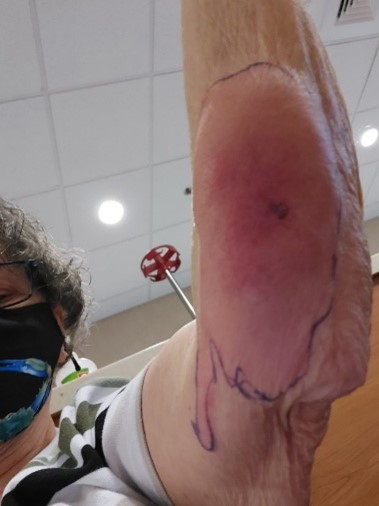
Patty Pecock’s flesh-eating disease necrotizing her arm from a cut on her pier tending her crab pots on the Harness Creek. Such infections are proliferating from excess nutrients in warming waters, an issue ignored in the new Bay Agreement. (Courtesy Photo)
The Trumpian wrecking ball has also crushed meaningful efforts to restore the Chesapeake Bay, not only by rescinding funding for bay environmental projects but by ensuring that the EPA will not enforce the Clean Water Act by imposing sanctions on recalcitrant states that failed to comply with the EPA’s 2010 pollution diet.
The truth or consequences moment for compliance was Jan. 1, 2025, which gave the states 15 years from 2010 to comply. After failing to take the agreed-upon steps to meet water quality standards under federal law, the states are now being given 15 more years to maybe do better.
The mandatory pollution reductions were ordered by the EPA only after repeated failures of Bay Agreements in 1987, 2000 and 2014 to reduce nutrient flows by at least 40% and also significantly cut sediment. These agreements were treated as voluntary, but a court suit settlement dictated the mandatory imposition of the Total Maximum Daily Load (TMDL) pollution diet in 2010.
For more than five years, the EPA and the bay states faced the increasing likelihood that the ordered reductions would not be met. Instead of ramping up pollution reduction measures, the EPA and bay state governors punted year after year to study how to proceed after the 2025 deadline. Now, we finally have the product of this delay — a tragically weak new draft Bay Agreement.
The EPA and bay states have kicked the can down the road again as a complacent environmental community watches obsequiously. Instead of any new, bold initiatives, the voluntary agreement weakens previous commitments. This document will govern bay restoration until 2040.
The Bay Management Board (EPA and bay state reps) approved the new agreement on Oct. 9. It will go through a Principals Staff Committee (EPA and bay state reps) review. In December, the Chesapeake Executive Council will vote on approval. The council consists of bay state governors, Washington, D.C.’s mayor, the EPA administrator and the Chesapeake Bay Commission.
The agreement has been politically sanitized to appear as if meaningful plans are being made, when actually it is a major setback.
First, by 2030, the TMDL strictures will be revised by the states and EPA, not by the EPA as required by law. The states will have until 2040 to meet their terms, 30 years after the TMDL was set in 2010 to be met in 2025. Many of the state commitments were made years ago and are being dropped or weakened. The agreement makes it clear its terms are voluntary, a weakness infecting bay restoration.
Next, the agreement does not mention the failure to meet required reductions in nutrients and sediment, nor does it mention fishery declines, flesh-eating diseases in humans and the harsh truths of more than 70% of the bay’s waters still being impaired with less than a 3% improvement since 1985.
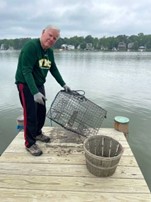
Gerald has been forced to wear gloves, long sleeve shirts, and long pants to avoid flesh-eating diseases from tending his crab pots. Global warming increases the bacteria causing such diseases. Rising water form such warming destroyed 120 feet of intertidal grasses at his and neighbor’s bulkheads. The new Bay Agreement ignores such warming. (Carol Swan)
The agreement also ignores addressing the increased flows of nutrients, especially nitrogen, from more intensive agriculture and development, global warming and the filled reservoir of the Conowingo Dam, adding 19 million pounds of nitrogen needing removal. The agreement is silent on any plans to address agricultural pollutants, which are the major reason the 2025 pollution deadline was not met. Agricultural reductions must provide up to 90% of dictated nitrogen reductions.
The goal for oysters is weak: By 2040, restore or conserve at least 2,000 additional acres of oyster reef habitat. Instead, there should be requirements for 10 more sanctuaries covering 2,000 acres by 2030. For critical bay grasses, targets are set for 90,000 acres by 2030 and 100,000 acres by 2040. This is absurd as the target set in 2000 was 185,000 acres by 2010. The commitment should be 185,000 acres by 2030 and 196,600 by 2035, the acreage the Bay Program now finds necessary for restoration.
The wetland goals are ridiculously low at 6,000 acres restored or created and 30,000 acres of wetlands enhanced by 2035. The 2014 agreement committed to 85,000 acres and 150,000, respectively, by 2025. The states fell miserably short. The 2014 wetland goals should be re-established so that 50% of these 2014 goals are achieved by 2030 and 100% by 2035.
The agreement weakens current commitments set in 2000 for annually adding 900 miles of critical riparian buffers. This goal should be kept through 2040. The agreement also should provide that bay states enact laws to prohibit development of existing buffers up to at least 100 feet, end the loss of forest cover, and increase forest canopy.
Patuxent Riverkeeper Fred Tutman and I submitted these and other changes in a 14-page comment letter to those fashioning the agreement. Former Maryland Governor Parris N. Glendening (1995-2003) submitted these comments:
“As Governor, I wholeheartedly endorsed and signed the 2000 Bay Agreement to remove the Bay from the federal list of impaired waters by 2010. We were disappointed when we failed and even today, more than 70% of the Bay’s waters are still impaired. I found the new Bay Agreement unacceptably weak … I find that the new Agreement destroys the 2014 Bay Agreement and eliminates the TMDL pollution limits.”
Governor Glendening supported our recommendations. None were adopted.
Top bay Ph.D. scientists in a Baltimore Sun op-ed noted: “At this rate of progress, it could take 350 years to achieve full water-quality attainment … It is sad to say, but the deflation of ambition in the proposed agreement makes us skeptical of the seriousness of commitment to bay recovery.”
This agreement either needs to be strengthened as suggested or the EPA needs to reimpose the TMDL with the 19 million more pounds of nitrogen added and require the states to meet their pollution targets by 2030 or face sanctions.
Gerald Winegrad represented the greater Annapolis area as a Democrat in the Maryland House of Delegates and Senate for 16 years. Contact him at gwwabc@comcast.net.