Action Plan
GERALD WINEGRAD: WEAK NEW BAY AGREEMENT IS DEATH WARRANT FOR CHESAPEAKE | COMMENTARY
The agreement has been politically sanitized to appear as if meaningful plans are being made, when actually it is a major setback.
Read MoreCOMMENTS AND RECOMMENDATIONS ON THE DRAFT 2025 CHESAPEAKE BAY WATERSHED AGREEMENT
The Draft omits references to the most critical commitment of the Bay states and EPA in the 2014 Watershed Agreement—to meet the TMDL and fully implement each state’s WIP. This omission tarnishes the entire process as this TMDL has guided restoration for 15 years, and supposedly still does. Meeting the reductions in N,P,S is the most important commitment in the 2014 Agreement as well as its predecessor, the 2000 Bay Agreement.
Read MoreChicken industry wins again, crippling Chesapeake Bay restoration efforts
In 2022, the industrialized Delmarva chicken industry produced 596 million chickens in 4,889 chicken houses—a record 4.4 billion pounds of chicken and $5 billion in wholesale value. This was a 38% broiler increase in a decade. These chickens produced 1.5 billion pounds of chicken excrement — equal to the weight of two Statues of Liberty! Corn and soybeans grown for feed are highly nitrogen intensive, adding more nitrogen to the bay.
Read MoreThe devastating Chesapeake blue crab collapse
Other factors affecting crab numbers include a failure to restore bay grasses (crab nurseries), polluted waters and invasive species. But the harsh reality is that the increasing harvest pressure triggered by astronomical crab prices is the only readily controllable fix to prevent an imminent crab collapse. However, all harvest restrictions — both existing and new — are rendered meaningless in Maryland because of nearly nonexistent enforcement. Tragically, the Maryland Department of Natural Resources (DNR) has chosen a laissez-faire approach to enforcement, allowing crabbers to act with impunity.
Read MoreEnding population growth is a mark of progress
Economic growth does not require population increases. We can grow our economy by using education and technology to increase productivity. We live in a world of finite resources with food, water, and health care insecurity. With slower or zero population growth, we can make greater progress toward resolving economic and environmental issues and boost our productivity as a nation and the quality of life for all of us. Calling for population growth to increase the number of workers flies in the face of the need to find employment for the 6.3 million currently unemployed.
Read MoreWith the climate crisis bearing down, Maryland legislators cave in to fossil fuels
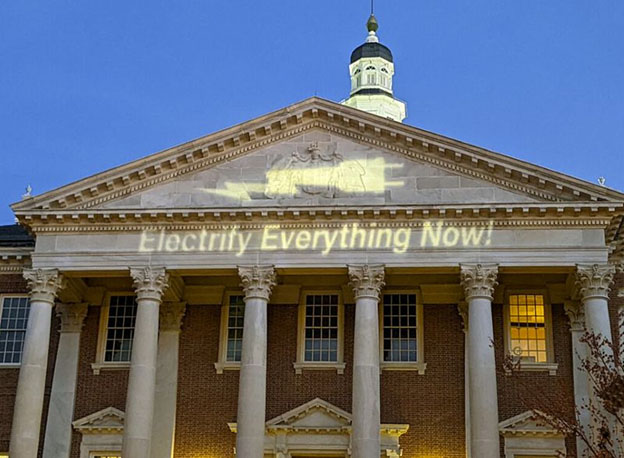
Suspending the gas tax may sound good, but it’s a bad idea. Are our elected officials blind to the fact that almost nine out of every 10 barrels of oil used in Maryland are consumed by the transportation sector and that 36% of greenhouse gas emissions come from motor vehicles? Or that Americans use more oil than any nation, exceeding the next highest nation by 54% while consuming 20% of all oil with only 4% of the world’s population?
Read More